✅ What you'll learn
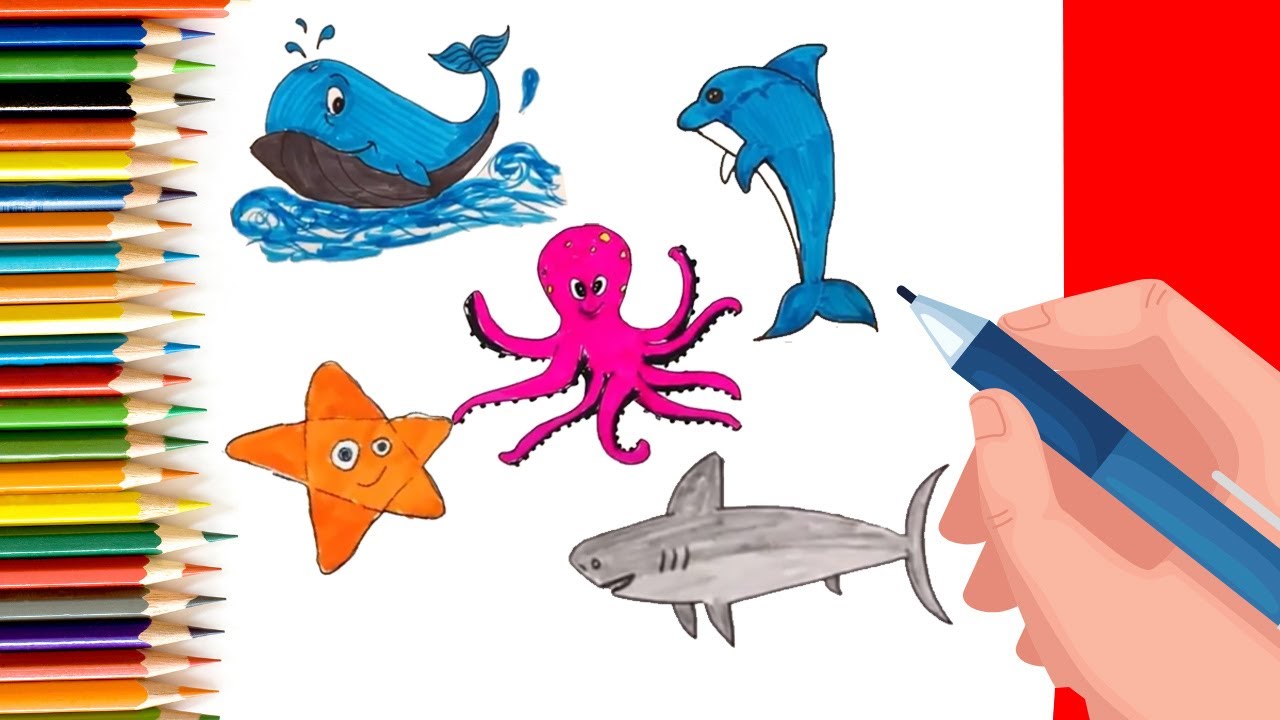
- How to draw How to draw Baby whale, dolphin, Octopus, star fish and more for kids step by step
- Basic shapes and outline techniques
- How to add details and texture
- Colouring and finishing tips
💡 Perfect if you're thinking...
Learn to Draw Baby whale, dolphin, Octopus, star fish and more for kids
Follow along with this easy step-by-step drawing tutorial and learn how to draw Baby whale, dolphin, Octopus, star fish and more for kids. Perfect for kids and beginners!
Materials You Will Need
- Drawing paper or sketchbook
- Pencil (HB or #2)
- Eraser
- Black marker or pen for outlining
- Colored pencils, markers, or crayons
Drawing Tips
- Start with light pencil lines so you can easily erase mistakes
- Take your time with each step
- Add your own creative touches to make it unique
- Practice drawing Baby whale, dolphin, Octopus, star fish and more for kids multiple times to improve
You Might Also Like
- How to Draw Flash
- How To Draw Kylian Mbappe | Step By Step #shorts
- How to draw boy without teeth folding surprise
- How to draw Santa Claus with Parikshet and Kids Fun Learn Club
- Easy Lord Ganesha by KidsFunLearnClub आसान प्रभु गणेश बनाना सीखें | Learn to draw easy Lord Ganesha by KidsFunLearnClub | Drawing Tutorial
How to Draw Baby Whale, Dolphin, Octopus, Star Fish And …: Step-by-Step for Kids
Get your pencil ready! Follow these easy steps and you'll have an amazing Baby Whale, Dolphin, Octopus, Star Fish And … drawing in no time.
What You'll Need
- Pencil (HB or 2B)
- Eraser
- White drawing paper
- Black marker (optional, for outlines)
- Coloured pencils or crayons
Step-by-Step: Drawing a Baby Whale, Dolphin, Octopus, Star Fish And …
Step 1: Start with Basic Shapes
Lightly sketch the basic shapes that make up the Baby Whale, Dolphin, Octopus, Star Fish And …'s body — usually an oval for the body and a circle for the head. Position the body in the centre of your page.
Step 2: Add the Head
Draw the Baby Whale, Dolphin, Octopus, Star Fish And …'s head connected to the body. Decide whether the Baby Whale, Dolphin, Octopus, Star Fish And … is looking forward, to the side, or slightly upward — the head angle sets the whole personality.
Step 3: Draw the Eyes and Nose
Add the facial features. Draw the eyes as round or oval shapes with a smaller pupil inside. Add the nose shape — this varies a lot between different animals.
Step 4: Add the Mouth
Draw the mouth appropriate for the Baby Whale, Dolphin, Octopus, Star Fish And …. Keep it simple — a curved line is often enough to give an expression.
Step 5: Draw the Ears or Head Features
Add the Baby Whale, Dolphin, Octopus, Star Fish And …'s distinctive head features — ears, horns, antlers, crest, or whatever makes this animal recognisable.
Step 6: Add the Legs and Feet
Draw the legs below the body. Consider how the Baby Whale, Dolphin, Octopus, Star Fish And … moves — running animals have longer legs, while stocky animals have shorter, wider legs. Add the feet or paws.
Step 7: Add the Tail and Body Details
Draw the tail and any markings on the body — stripes, spots, patches, or colour divisions. These details make your Baby Whale, Dolphin, Octopus, Star Fish And … look specific and real.
Step 8: Add Texture and Shading
Use short, light pencil strokes to suggest fur, scales, or feathers. Add shading on the underside of the body to make it look three-dimensional.
Colouring Your Baby Whale, Dolphin, Octopus, Star Fish And …
Look up the real colours of a Baby Whale, Dolphin, Octopus, Star Fish And … for reference. Most animals have a lighter belly and a darker back — use two or three shades of the main colour to show this.
Tips from Parikshet
- Study the proportions of a real Baby Whale, Dolphin, Octopus, Star Fish And … — are the legs long or short? Is the head big or small compared to the body?
- The eyes are the most expressive part — take your time to get them right, especially the highlight dot that makes them look alive.
- Practice makes perfect — try drawing it again tomorrow!
Try This With ChatGPT
With a grown-up, open a new ChatGPT chat and paste this prompt, changing [my age] to your age:
I am [my age] years old and I want to draw the picture called "How to draw Baby whale, dolphin, Octopus, star fish and". Give me 6 steps using only simple shapes like circles, ovals and lines. Give one step at a time and wait until I type "next" before giving the following step.
Exact steps, follow-up prompts and safety rules are in our parent-guided ChatGPT guide. More ideas: creative AI activities for kids.
🧠 Quick Quiz — Test What You Learned!
Created by Parikshet & Dad
Hi! I'm Parikshet, an 11-year-old creator from Dubai who loves drawing, art, science experiments, and golf. My dad and I run KidsFunLearnClub to share fun learning activities with kids around the world. We've created over 1,900 tutorials and videos to help you learn and have fun!
🎁 Free AI Activity Pack for Kids
20 hands-on AI activities Parikshet uses with his students — free, no credit card, instant download.
Get the Free Pack →Parikshet also teaches AI!
Join thousands of kids learning how AI works — in simple, fun lessons anyone can follow. Free activity pack included.
Explore AI for Kids → What is AI? Start here