✅ What you'll learn
- What Why ChatGPT is NOT an AI Agent (And What You’re Missing!) means in simple words
- Real-world examples kids understand
- How to use this safely
- Fun activities to try yourself
💡 Perfect if you're thinking...
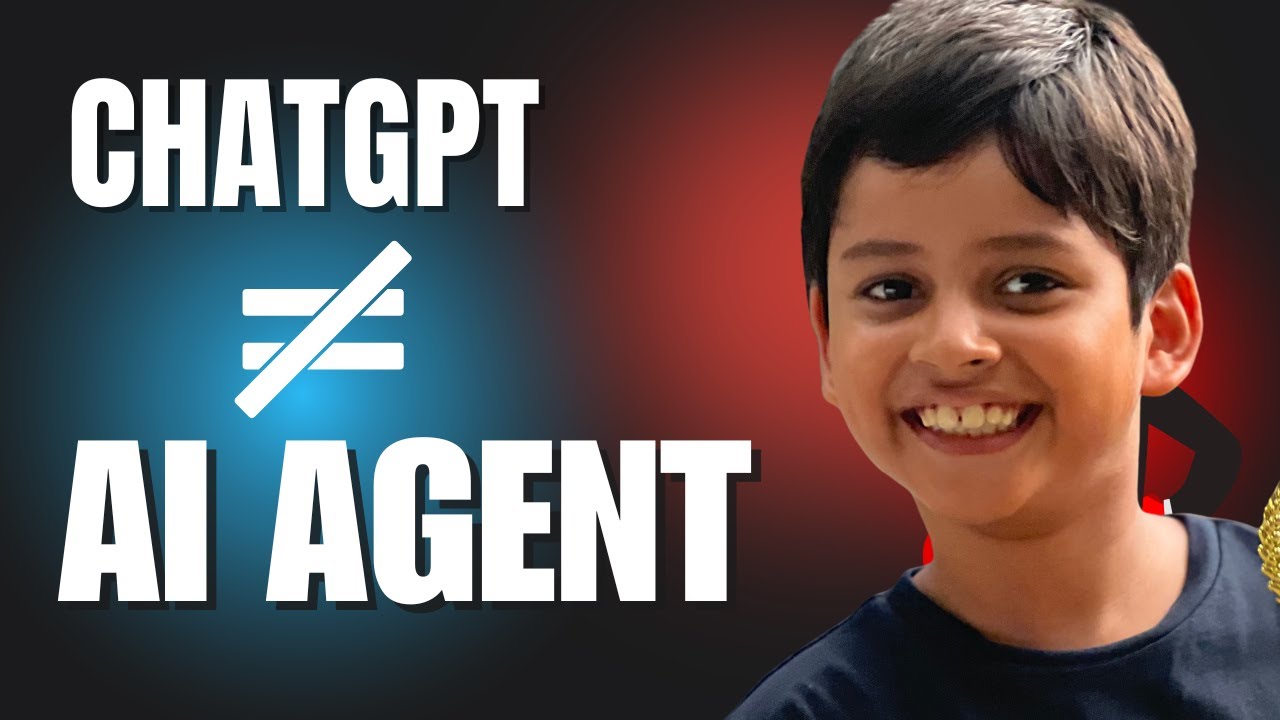
Why ChatGPT is NOT an AI Agent (And What You’re Missing!)
ChatGPT on its own is not an AI agent — it's the brain. A true AI agent is an LLM PLUS tools, memory, and the ability to take actions on its own to reach a goal.
The Difference, Simply
Think of ChatGPT as a brilliant person locked in a room with no phone, no internet, and no hands. It can talk and reason, but it can't do anything in the real world. An AI agent gives that brain tools (like web search or a calculator), memory (so it remembers earlier steps), and permission to act — so it can actually complete tasks.
So when ChatGPT can browse the web, run code, or use plugins, it's behaving like an agent. The plain chat box, by itself, is just the reasoning part.
Frequently Asked Questions
Is ChatGPT an AI agent?
By itself, no. It's the reasoning 'brain.' It becomes agent-like only when given tools, memory, and the ability to take actions toward a goal.
What makes something an AI agent?
An LLM brain plus tools (like search or a calculator), memory of earlier steps, and the ability to act on its own to reach a goal.
Why does this difference matter?
Because agents can complete real multi-step tasks, while a plain chatbot can only answer what you type. Knowing the difference helps you use each one well.
📚 Sources & Further Reading
- ChatGPT — Wikipedia
- Neural networks — Wikipedia
- Large language models — Wikipedia
- Artificial intelligence — Britannica
Written by Parikshet More (KidsFunLearnClub, Dubai) and reviewed for accuracy. Facts checked against the references above.
What Is the Difference Between ChatGPT and an AI Agent?
This is one of the most important and frequently misunderstood distinctions in all of modern AI. ChatGPT is a chatbot — it responds to your messages brilliantly and generates impressive text. But an AI agent is something fundamentally different and far more powerful. Here is exactly what you are missing if you think they are the same thing.
ChatGPT vs AI Agent: The Key Differences
- Reactive vs Proactive — ChatGPT waits for you to send a message, then responds. An AI agent can initiate actions on its own — it notices something needs to happen and does it without being prompted.
- One Turn vs Many Steps — ChatGPT completes one message at a time. An agent can execute a 20-step autonomous plan: search, compare, decide, purchase, confirm, then email you the summary — all automatically.
- Text Only vs Many Tools — Standard ChatGPT generates text in response to text. An agent uses web browsers, calendars, email, databases, code runners, and more — simultaneously if needed.
- No Memory vs Persistent Memory — Each ChatGPT conversation starts completely fresh. A true agent maintains memory of your preferences, ongoing projects, and past decisions indefinitely across sessions.
- Human Guided vs Autonomous — ChatGPT always needs you to press send next. An agent can run for hours completing complex tasks while you sleep, study, or play.
Why This Distinction Matters Right Now
- If you are only using AI as a chatbot, you are accessing perhaps 10% of what AI technology can currently do.
- Businesses deploying real agents — not just chatbots — report saving 10 times more time and operational cost.
- The next generation of all major AI products will be agent-first, not chatbot-first. Understanding the difference puts you years ahead.
Fun Fact!
ChatGPT itself now has an Agentic Mode that lets it browse the web, run code, and complete multi-step tasks — the line between chatbot and agent is blurring fast. The agent revolution is already here!
🧠 Quick Quiz — Test What You Learned!
Created by Parikshet & Dad
Hi! I'm Parikshet, an 11-year-old creator from Dubai who loves drawing, art, science experiments, and golf. My dad and I run KidsFunLearnClub to share fun learning activities with kids around the world. We've created over 1,900 tutorials and videos to help you learn and have fun!
🎁 Free AI Activity Pack for Kids
20 hands-on AI activities Parikshet uses with his students — free, no credit card, instant download.
Get the Free Pack →Parikshet also teaches AI!
Join thousands of kids learning how AI works — in simple, fun lessons anyone can follow. Free activity pack included.
Explore AI for Kids → What is AI? Start here