✅ What you'll learn
- The science concept behind the experiment
- How to set it up safely
- What to observe and record
- Why the result happens
💡 Perfect if you're thinking...
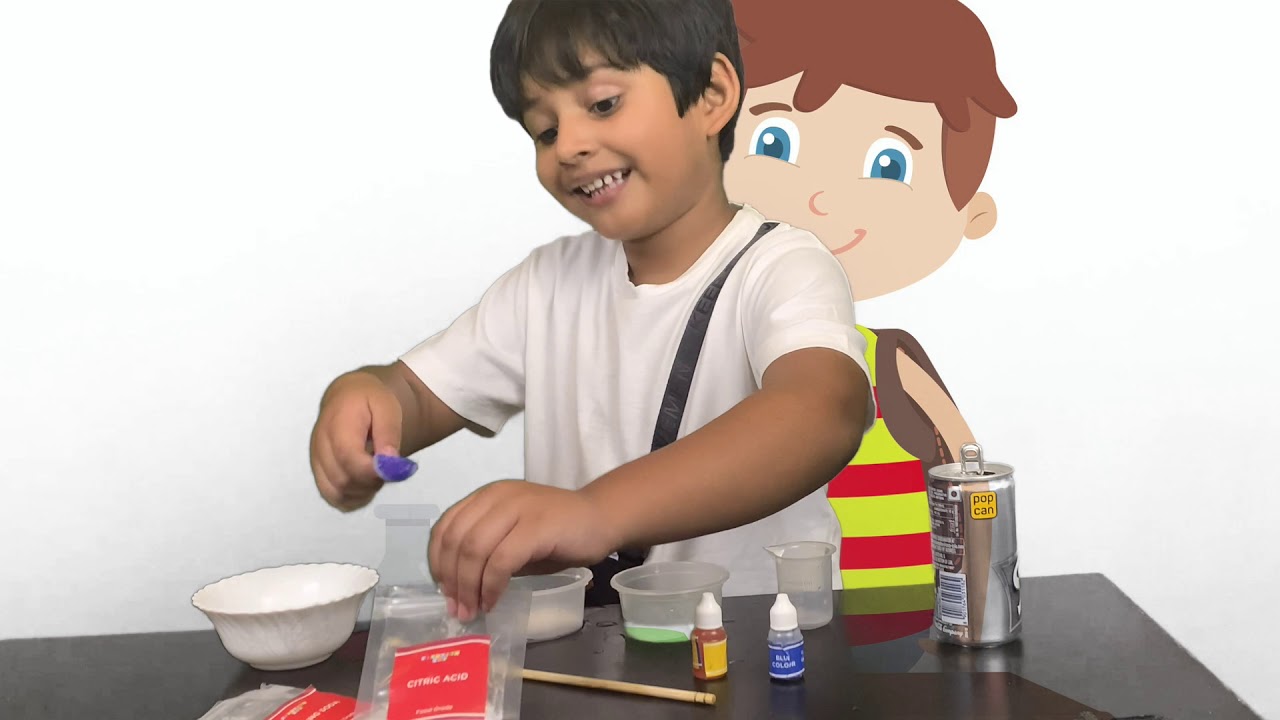
Science Time with Parikshet | How to mak eFIZZZZ
Watch this fun and entertaining video from Kids Fun Learn Club!
The science behind it, made simple
Science is just a careful way of asking questions and looking for answers. When you wonder why the sky is blue, why ice melts, or why magnets stick, you are already thinking like a scientist.
The cool part about science is that anyone can do it, including kids. All you need is a question, a bit of patience, and the willingness to be wrong sometimes. Mistakes are how new ideas get discovered.
Real scientists test their ideas with experiments. They write down what they expect, try it out, and see what happens. If the result is different from what they thought, that is not a failure. It is a clue.
The more you learn about one part of science, the more you spot it everywhere. Cooking is chemistry. Sports are physics. Even brushing your teeth has a tiny science story behind it.
Fun facts to share at school
- Your body has around 37 trillion cells, all working together
- Honey never goes bad, even after thousands of years
- Bananas are slightly radioactive, but completely safe to eat
- A single bolt of lightning is five times hotter than the surface of the Sun
Try this at home
Pick one fact above and explain it to a grown up at dinner. Teaching someone else is one of the fastest ways to remember a science idea for good.
Frequently Asked Questions
Who makes these videos?
Kids Fun Learn Club is a channel run by a father-son duo making learning fun for kids worldwide!
Where can I find more videos?
Visit our YouTube channel Kids Fun Learn Club for hundreds more fun videos and tutorials!
You Might Also Like
What Is the Fizz Science Experiment?
The fizz experiment explores what happens when you combine an acid and a base — one of the most fundamental chemical reactions in all of science. You will create dramatic fizzing and foaming reactions using everyday household ingredients and learn exactly why fizzy drinks, bread, and even antacid tablets work the way they do.
What You'll Need
- Bicarbonate of soda (baking soda)
- White vinegar or lemon juice
- A clear glass or bowl
- Dish soap
- Food colouring
- A tray to catch overflow
Step-by-Step: The Mega Fizz
- Place your glass in the centre of a tray to catch any overflow.
- Add 4 tablespoons of bicarbonate of soda to the glass.
- Squeeze in a generous amount of dish soap and stir it gently through the baking soda.
- Add a few drops of food colouring — red or orange looks spectacular.
- Pour in half a cup of white vinegar or squeeze in a whole lemon and stand back.
- Watch the mixture erupt into a massive tower of colourful foam that keeps growing for 10 to 15 seconds!
- Try adding more vinegar to restart the reaction as long as there is still baking soda remaining.
The Science Behind It
Bicarbonate of soda (sodium bicarbonate) is a base, and vinegar and lemon juice are acids. When an acid meets a base, they react in a neutralisation reaction that produces carbon dioxide gas, water, and a salt. The carbon dioxide gas is produced very rapidly and gets trapped in the dish soap bubbles, causing the dramatic foam tower. The same reaction happens slowly inside bread dough — the carbon dioxide bubbles are what make bread light and fluffy rather than dense and heavy.
Fun Facts About Acid-Base Reactions
- Your stomach uses acid (hydrochloric acid) to digest food — antacid tablets use a base to neutralise that acid when you have too much of it.
- The fizzing in fizzy drinks comes from dissolved carbon dioxide, not an acid-base reaction — but the gas produced is exactly the same.
- Lemon juice is acidic enough to conduct a small amount of electricity — it can power a tiny LED light when connected properly.
Try This With ChatGPT
With a grown-up, open a new ChatGPT chat and paste this prompt, changing [my age] to your age:
Explain “Science Time with Parikshet — How to mak eFIZZZZ” to a [my age]-year-old in 4 short sentences. Then give me one safe experiment I can do at home with a grown-up: the materials, the steps, and what I should see. Finally ask me 3 questions to check I understood.
Exact steps, follow-up prompts and safety rules are in our parent-guided ChatGPT guide. More ideas: creative AI activities for kids.
🧠 Quick Quiz — Test What You Learned!
Created by Parikshet & Dad
Hi! I'm Parikshet, an 11-year-old creator from Dubai who loves drawing, art, science experiments, and golf. My dad and I run KidsFunLearnClub to share fun learning activities with kids around the world. We've created over 1,900 tutorials and videos to help you learn and have fun!
🎁 Free AI Activity Pack for Kids
20 hands-on AI activities Parikshet uses with his students — free, no credit card, instant download.
Get the Free Pack →Parikshet also teaches AI!
Join thousands of kids learning how AI works — in simple, fun lessons anyone can follow. Free activity pack included.
Explore AI for Kids → What is AI? Start here