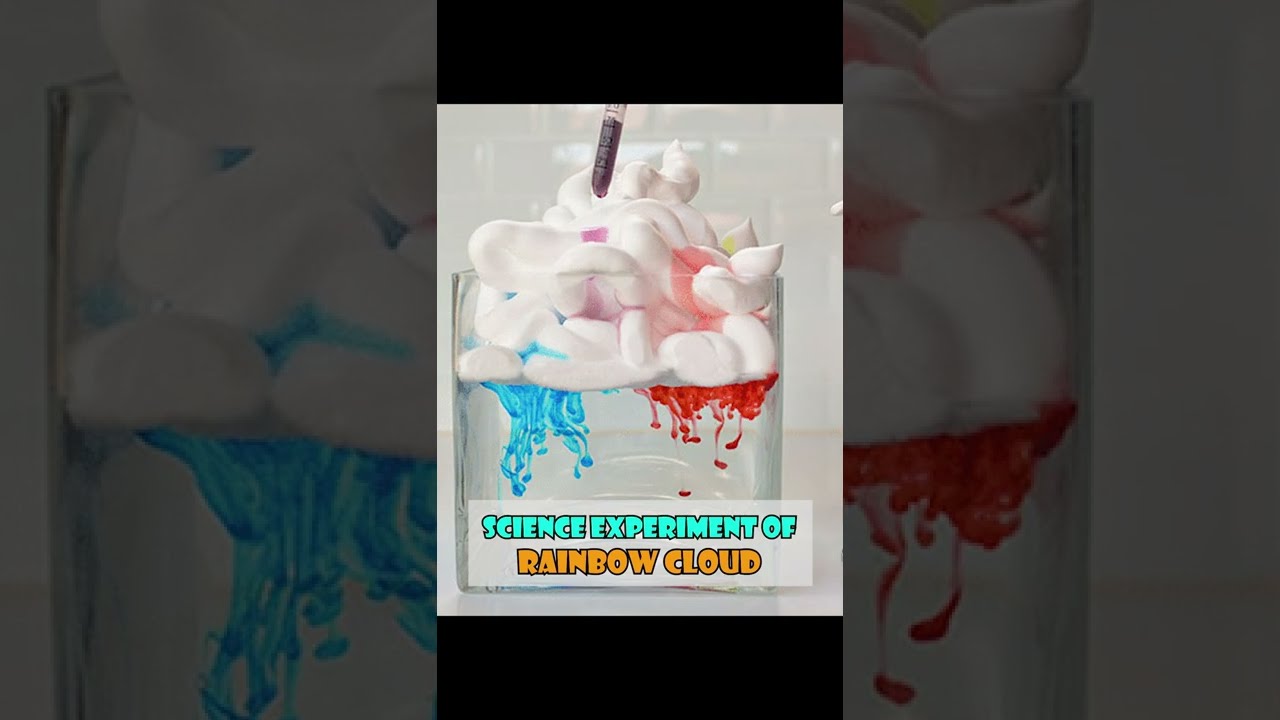
✅ What you'll learn
- The science concept behind the experiment
- How to set it up safely
- What to observe and record
- Why the result happens
💡 Perfect if you're thinking...
Cool experiments
Watch this fun and entertaining video from Kids Fun Learn Club!
The science behind it, made simple
Science is just a careful way of asking questions and looking for answers. When you wonder why the sky is blue, why ice melts, or why magnets stick, you are already thinking like a scientist.
The cool part about science is that anyone can do it, including kids. All you need is a question, a bit of patience, and the willingness to be wrong sometimes. Mistakes are how new ideas get discovered.
Real scientists test their ideas with experiments. They write down what they expect, try it out, and see what happens. If the result is different from what they thought, that is not a failure. It is a clue.
The more you learn about one part of science, the more you spot it everywhere. Cooking is chemistry. Sports are physics. Even brushing your teeth has a tiny science story behind it.
Fun facts to share at school
- Your body has around 37 trillion cells, all working together
- Honey never goes bad, even after thousands of years
- Bananas are slightly radioactive, but completely safe to eat
- A single bolt of lightning is five times hotter than the surface of the Sun
Try this at home
Pick one fact above and explain it to a grown up at dinner. Teaching someone else is one of the fastest ways to remember a science idea for good.
Frequently Asked Questions
Who makes these videos?
Kids Fun Learn Club is a channel run by a father-son duo making learning fun for kids worldwide!
Where can I find more videos?
Visit our YouTube channel Kids Fun Learn Club for hundreds more fun videos and tutorials!
You Might Also Like
- How to make a Volcano DIY Science Experiment!!!
- Science Experiment with Parikshet Ep 04 | Walking Water | Fun with Science
- Science Experiment with Parikshet Ep 03| LIGHT LAMP| Fun with Science
- Science Experiment with Parikshet Ep 01| Ghost Glove | Fun with Science
- Science experiments at home for kids
About This Story
This post covers a collection of cool science experiments designed to be done at home using everyday household materials. These experiments demonstrate real scientific principles — from acid-base reactions to surface tension to density — in ways that are visual, dramatic, and genuinely exciting for curious young scientists.
What to Look For
- Notice the immediate visible reactions when different substances combine — colour changes, fizzing, and movement are all signs that chemistry is happening.
- Watch how different materials behave differently — some sink in water, some float, some mix, and some absolutely refuse to mix.
- Pay attention to how temperature affects reactions — many chemistry experiments work faster when warm and slower when cold.
- Look for the moment when one small addition (like a drop of soap) causes a dramatic and sudden change in the whole system.
Words to Know
- Experiment: A controlled test where you change one thing and observe what effect it has on the result.
- Hypothesis: Your prediction of what will happen before you do the experiment — making one first makes the results more meaningful.
- Variable: The one thing you change between experiments while keeping everything else the same.
- Observation: What you notice with your senses during the experiment — seeing, hearing, feeling, and smelling (never tasting in chemistry!).
- Conclusion: What you learn from comparing what happened with what you predicted would happen.
Talk About It!
- Before trying any experiment, write down your hypothesis — what do you think will happen and why? Were you right?
- What would you change about the experiment to get a different result? How would you test your new idea?
- Which experiment surprised you the most and why? What did it teach you that you did not know before?
What Did You Learn?
Science is not about memorising facts — it is about asking questions, making predictions, testing them, and being willing to be surprised by the results. Every experiment, whether it works as expected or not, teaches you something real!
Try This With ChatGPT
With a grown-up, open a new ChatGPT chat and paste this prompt, changing [my age] to your age:
Explain “Cool experiments — Fun Facts and Experiments for Kids” to a [my age]-year-old in 4 short sentences. Then give me one safe experiment I can do at home with a grown-up: the materials, the steps, and what I should see. Finally ask me 3 questions to check I understood.
Exact steps, follow-up prompts and safety rules are in our parent-guided ChatGPT guide. More ideas: creative AI activities for kids.
🧠 Quick Quiz — Test What You Learned!
Created by Parikshet & Dad
Hi! I'm Parikshet, an 11-year-old creator from Dubai who loves drawing, art, science experiments, and golf. My dad and I run KidsFunLearnClub to share fun learning activities with kids around the world. We've created over 1,900 tutorials and videos to help you learn and have fun!
🎁 Free AI Activity Pack for Kids
20 hands-on AI activities Parikshet uses with his students — free, no credit card, instant download.
Get the Free Pack →Parikshet also teaches AI!
Join thousands of kids learning how AI works — in simple, fun lessons anyone can follow. Free activity pack included.
Explore AI for Kids → What is AI? Start here