✅ What you'll learn
- The science concept behind the experiment
- How to set it up safely
- What to observe and record
- Why the result happens
💡 Perfect if you're thinking...
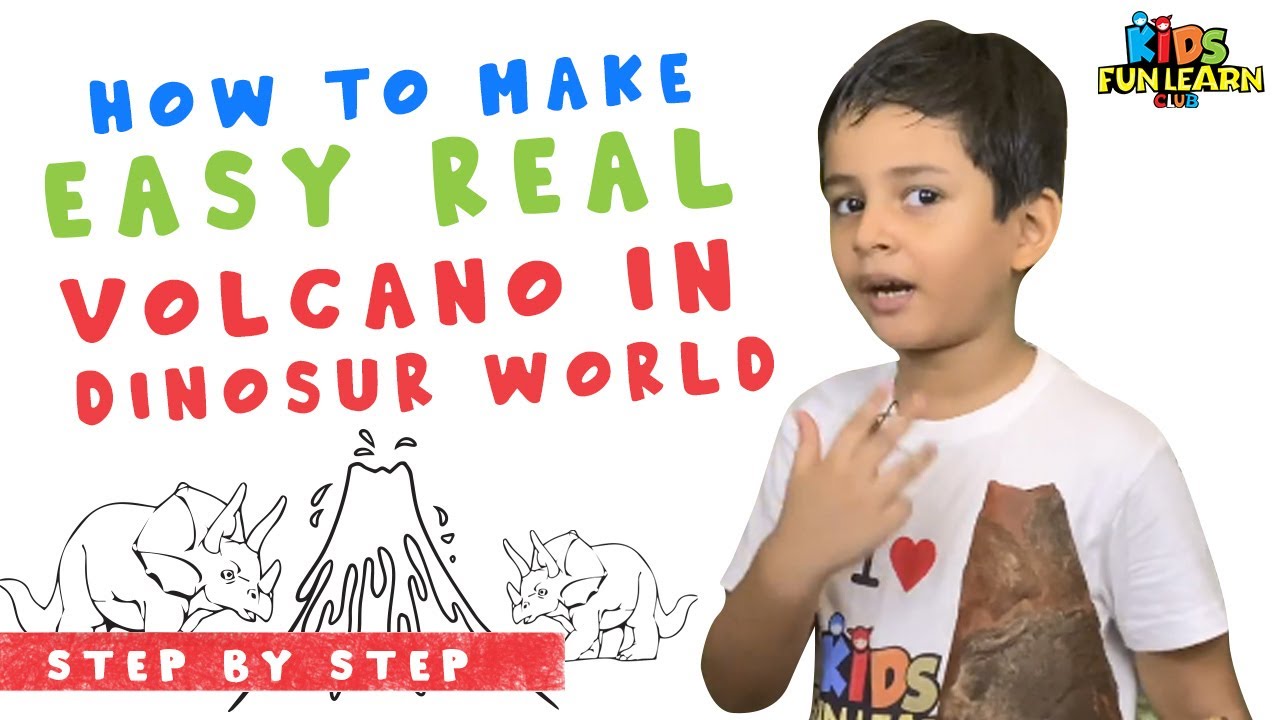
How to make a Volcano DIY Science Experiment!!!
Watch this fun and entertaining video from Kids Fun Learn Club!
The science behind it, made simple
A volcano is a mountain with a secret. Deep inside, there is hot melted rock called magma, and when it pushes up to the surface it turns into lava. The mountain itself is built up over many years from layers of cooled lava and ash.
Volcanoes form where the giant rocky plates that make up Earth's surface meet, pull apart, or bump into each other. When they shift, magma finds a path upward, and the volcano is born. Some grow slowly over thousands of years, and some appear faster than you might think.
Here is a fun way to picture it. Imagine shaking a fizzy drink, then opening the lid. The bubbles rush out fast because the pressure was trapped. A volcano works in a similar way, only with rock and gas instead of soda.
Not every volcano is angry. Some are quiet for centuries, and some are active and gentle, with slow lava flows that scientists can study up close. The really powerful ones, like Mount St. Helens, can change the shape of the land in a single day.
Fun facts to share at school
- There are more than 1,500 active volcanoes on Earth right now
- The biggest volcano in our solar system is on Mars, not Earth
- Lava can reach over 1,200 degrees Celsius, hotter than a pizza oven
- Some islands, like Hawaii, were built entirely by volcanoes
Try this at home
Pick one fact above and explain it to a grown up at dinner. Teaching someone else is one of the fastest ways to remember a science idea for good.
Frequently Asked Questions
Who makes these videos?
Kids Fun Learn Club is a channel run by a father-son duo making learning fun for kids worldwide!
Where can I find more videos?
Visit our YouTube channel Kids Fun Learn Club for hundreds more fun videos and tutorials!
You Might Also Like
What Is the Volcano Science Experiment?
The DIY volcano is one of the most famous and exciting science experiments for kids. You build a model volcano and make it erupt using a simple chemical reaction that produces thick, bubbling foam that looks just like real lava. It is safe, satisfying, and teaches real chemistry!
What You'll Need
- An empty plastic bottle (500ml)
- A tray or baking dish to catch the overflow
- Modelling clay or scrunched newspaper (to shape the volcano around the bottle)
- 3 tablespoons of bicarbonate of soda (baking soda)
- Half a cup of white vinegar
- Red and orange food colouring
- A squirt of dish soap
Step-by-Step Instructions
- Stand your plastic bottle in the centre of your tray. Mould clay or tape scrunched newspaper around the outside to create the sloping shape of a volcano. Leave the bottle opening at the top uncovered — this is your crater.
- Add 3 tablespoons of bicarbonate of soda into the bottle.
- In a separate cup, mix half a cup of white vinegar with red and orange food colouring to make your "lava."
- Add a generous squirt of dish soap to your coloured vinegar mixture and stir gently.
- Quickly pour the vinegar mixture into the bottle through the crater opening.
- Step back and watch your volcano erupt with thick, colourful, bubbling foam!
The Science Behind It
Bicarbonate of soda is a base and vinegar is an acid. When an acid and a base combine, they react rapidly and produce carbon dioxide gas. The dish soap traps that carbon dioxide in bubbles, creating thick foam that rises quickly — just like real lava rising through a volcanic vent. This is called an acid-base reaction and it is the same chemistry used in baking to make bread and cakes rise.
Fun Facts About Volcanoes and Chemistry
- Real volcanoes erupt from molten rock called magma that has been heated by the earth's core at temperatures above 700°C.
- The carbon dioxide produced in your experiment is the same gas that makes fizzy drinks bubbly.
- You can repeat the experiment immediately by adding more bicarbonate of soda and vinegar — the reaction resets completely each time.
Try This With ChatGPT
With a grown-up, open a new ChatGPT chat and paste this prompt, changing [my age] to your age:
Explain “How to make a Volcano DIY Science Experiment!!!” to a [my age]-year-old in 4 short sentences. Then give me one safe experiment I can do at home with a grown-up: the materials, the steps, and what I should see. Finally ask me 3 questions to check I understood.
Exact steps, follow-up prompts and safety rules are in our parent-guided ChatGPT guide. More ideas: creative AI activities for kids.
🧠 Quick Quiz — Test What You Learned!
Created by Parikshet & Dad
Hi! I'm Parikshet, an 11-year-old creator from Dubai who loves drawing, art, science experiments, and golf. My dad and I run KidsFunLearnClub to share fun learning activities with kids around the world. We've created over 1,900 tutorials and videos to help you learn and have fun!
🎁 Free AI Activity Pack for Kids
20 hands-on AI activities Parikshet uses with his students — free, no credit card, instant download.
Get the Free Pack →Parikshet also teaches AI!
Join thousands of kids learning how AI works — in simple, fun lessons anyone can follow. Free activity pack included.
Explore AI for Kids → What is AI? Start here