✅ What you'll learn
- The science concept behind the experiment
- How to set it up safely
- What to observe and record
- Why the result happens
💡 Perfect if you're thinking...
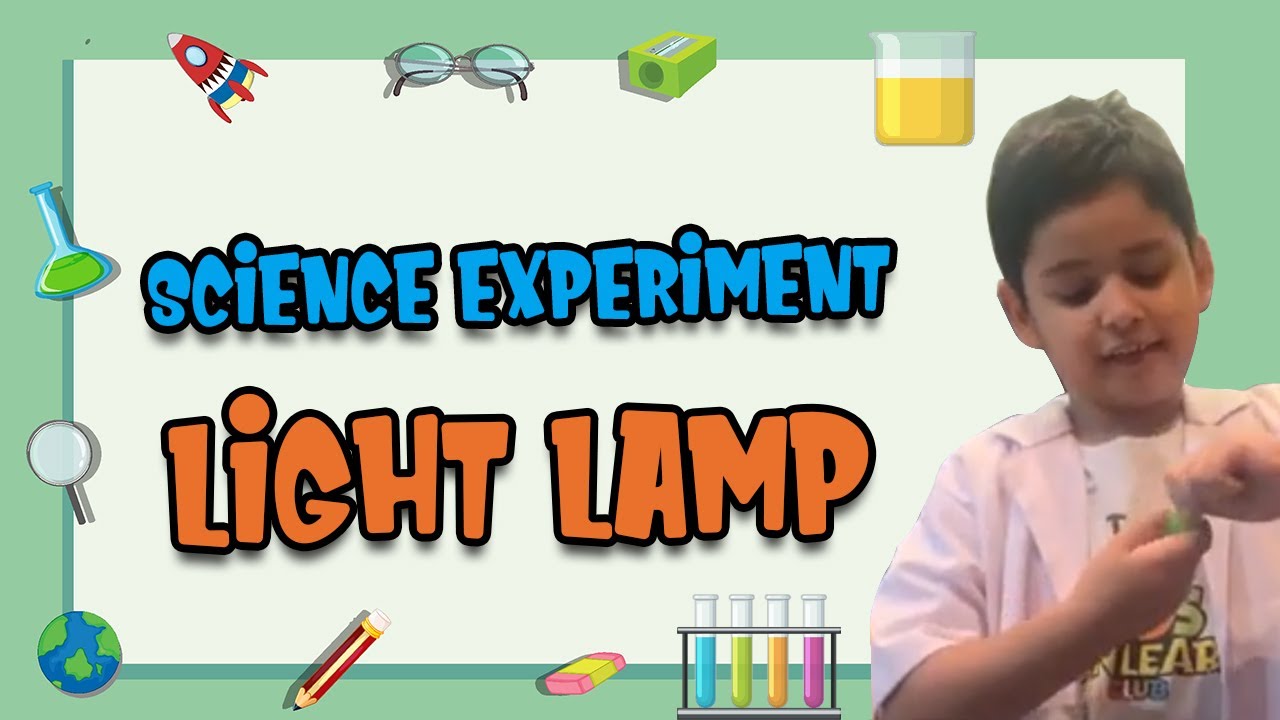
Science Experiment with Parikshet Ep 03| LIGHT LAMP| Fun with Science
Watch this fun and entertaining video from Kids Fun Learn Club!
The science behind it, made simple
Science is just a careful way of asking questions and looking for answers. When you wonder why the sky is blue, why ice melts, or why magnets stick, you are already thinking like a scientist.
The cool part about science is that anyone can do it, including kids. All you need is a question, a bit of patience, and the willingness to be wrong sometimes. Mistakes are how new ideas get discovered.
Real scientists test their ideas with experiments. They write down what they expect, try it out, and see what happens. If the result is different from what they thought, that is not a failure. It is a clue.
The more you learn about one part of science, the more you spot it everywhere. Cooking is chemistry. Sports are physics. Even brushing your teeth has a tiny science story behind it.
Fun facts to share at school
- Your body has around 37 trillion cells, all working together
- Honey never goes bad, even after thousands of years
- Bananas are slightly radioactive, but completely safe to eat
- A single bolt of lightning is five times hotter than the surface of the Sun
Try this at home
Pick one fact above and explain it to a grown up at dinner. Teaching someone else is one of the fastest ways to remember a science idea for good.
Frequently Asked Questions
Who makes these videos?
Kids Fun Learn Club is a channel run by a father-son duo making learning fun for kids worldwide!
Where can I find more videos?
Visit our YouTube channel Kids Fun Learn Club for hundreds more fun videos and tutorials!
You Might Also Like
What Is the Light Lamp Experiment?
The lava lamp science experiment lets you make your own colourful "lava lamp" at home using oil, water, food colouring, and an effervescent tablet. You will see bubbles of coloured water rising and falling through oil in a mesmerising loop — and learn about density in the process!
What You'll Need
- A tall clear glass or bottle
- Vegetable oil
- Water
- Food colouring (any bright colour)
- Effervescent tablets (like Alka-Seltzer or any dissolving vitamin tablet)
Step-by-Step Instructions
- Fill your glass about three-quarters full with vegetable oil.
- In a separate cup, mix water with a generous amount of food colouring to make it brightly coloured.
- Slowly pour the coloured water into the glass of oil. Watch as the water sinks to the bottom below the oil — they do not mix at all.
- Break an effervescent tablet into 2 or 3 smaller pieces.
- Drop one piece into the glass and watch immediately.
- Bubbles of coloured water will rise through the oil in glowing blobs, reach the top, pop, and then fall back down — exactly like a real lava lamp!
- Keep dropping tablet pieces to restart the effect whenever it slows down.
The Science Behind It
Oil and water do not mix because they have very different molecular structures — water molecules are polar (they have positive and negative ends) while oil molecules are non-polar. The denser water always sinks below the less dense oil. The tablet reacts with the water to produce carbon dioxide gas, which attaches to water droplets and pulls them upward through the oil. When the bubbles reach the surface and pop, the now-heavier water droplets sink back down — creating the continuous lava lamp cycle.
Fun Facts About Density and Lava Lamps
- Real commercial lava lamps use wax and a special liquid — the wax melts when warm (becoming less dense) and rises, then cools and sinks again.
- Oil and water not mixing is the same reason that cooking oil forms a layer on top of salad dressing if you leave it standing.
- You can make your lava lamp even more dramatic by doing the experiment in a darkened room with a torch shining through the glass from behind.
🧠 Quick Quiz — Test What You Learned!
Created by Parikshet & Dad
Hi! I'm Parikshet, an 11-year-old creator from Dubai who loves drawing, art, science experiments, and golf. My dad and I run KidsFunLearnClub to share fun learning activities with kids around the world. We've created over 1,900 tutorials and videos to help you learn and have fun!
🎁 Free AI Activity Pack for Kids
20 hands-on AI activities Parikshet uses with his students — free, no credit card, instant download.
Get the Free Pack →Parikshet also teaches AI!
Join thousands of kids learning how AI works — in simple, fun lessons anyone can follow. Free activity pack included.
Explore AI for Kids → What is AI? Start here