✅ What you'll learn
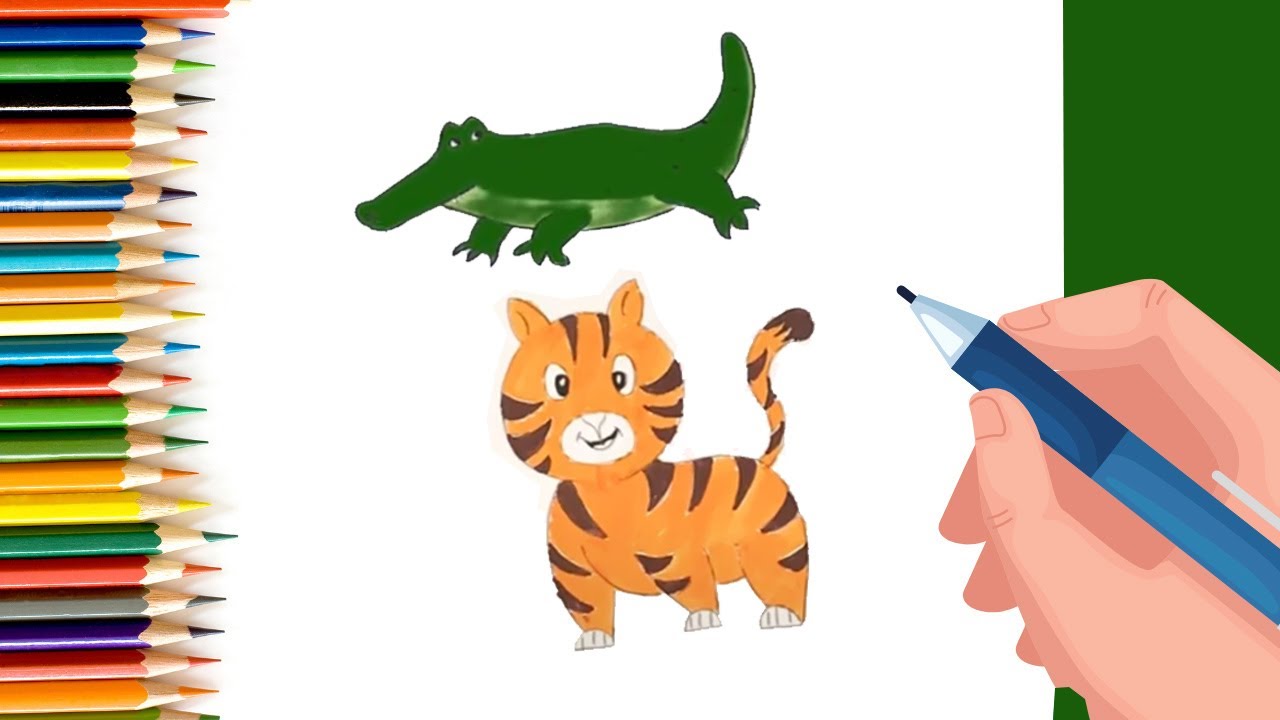
- How to draw Learn to draw Crocodile, Polar Bear, Tiger Cub, Elephant and more step by step
- Basic shapes and outline techniques
- How to add details and texture
- Colouring and finishing tips
💡 Perfect if you're thinking...
Learn to Draw Learn to draw Crocodile, Polar Bear, Tiger Cub, Elephant and more
Follow along with this easy step-by-step drawing tutorial and learn how to draw Learn to draw Crocodile, Polar Bear, Tiger Cub, Elephant and more. Perfect for kids and beginners!
Materials You Will Need
- Drawing paper or sketchbook
- Pencil (HB or #2)
- Eraser
- Black marker or pen for outlining
- Colored pencils, markers, or crayons
Drawing Tips
- Start with light pencil lines so you can easily erase mistakes
- Take your time with each step
- Add your own creative touches to make it unique
- Practice drawing Learn to draw Crocodile, Polar Bear, Tiger Cub, Elephant and more multiple times to improve
You Might Also Like
How to Draw a Crocodile — Plus Tips for Polar Bear, Tiger Cub, and Elephant
Let's focus on the mighty crocodile for our main drawing, then give you quick tips for the other amazing animals too! Follow along with Parikshet.
What You'll Need
- Pencil (HB or 2B)
- Eraser
- White paper
- Black marker
- Green, grey, white, and orange coloured pencils
Step-by-Step: Drawing a Crocodile
Step 1: Draw the Long Body
Draw a long, flat oval stretched horizontally across your page — wider in the middle, tapering toward the right for the tail. The body should be very low to the ground, almost like a log.
Step 2: Draw the Long Snout
At the left end of the body, draw a very long, flat rectangle extending forward — almost as long as the body itself. Make the top and bottom of the snout parallel and nearly flat.
Step 3: Add the Jaw Line and Teeth
Along the length of the snout, draw a zigzag line with large pointed triangles — these are the teeth that show even when the mouth is closed. Add triangles along both top and bottom jaw, interlocking slightly.
Step 4: Draw the Four Short Legs
Draw four stubby legs sticking out from the sides of the body. Each leg has three or four curved claw shapes at the end. Crocodile legs are very short and low-slung.
Step 5: Draw the Tail
The tail tapers from the right end of the body into a long pointed tip. Draw diamond ridge shapes running along the top of the tail — these are the scute plates.
Step 6: Add the Eye on Top of the Head
Near the snout on top of the head, draw a small raised oval — the eye sits on top so the croc can see while mostly submerged. Add a slit pupil inside.
Step 7: Add Scale Texture
Cover the body with small square and oval scale shapes in rows. Scales are largest on the back and smaller on the sides.
Step 8: Colour and Add Quick Animal Tips
Outline in black. Colour back dark green, sides medium green, belly pale yellowish-green. Teeth white, eyes golden-yellow.
Polar Bear: Big round head, teardrop body, all white with light blue shadow. Black nose, tiny black eyes.
Tiger Cub: Oval head, round ears, fluffy body. Orange with bold black stripes. White muzzle area.
Elephant: Large round head, huge fan ears, long trunk curling at the tip. Grey with wrinkle lines.
Colouring Tips
Crocodile dark green on back, lighter on belly. The contrast makes the body look three-dimensional.
Parikshet's Tips
- The long flat snout is what makes a crocodile instantly recognisable — make it really long!
- Scute ridges along the spine add a prehistoric, tough look.
- Practice every day and you'll get better!
Try This With ChatGPT
With a grown-up, open a new ChatGPT chat and paste this prompt, changing [my age] to your age:
I am [my age] years old and I want to draw the picture called "Learn to draw Crocodile, Polar Bear, Tiger Cub, Elephan". Give me 6 steps using only simple shapes like circles, ovals and lines. Give one step at a time and wait until I type "next" before giving the following step.
Exact steps, follow-up prompts and safety rules are in our parent-guided ChatGPT guide. More ideas: creative AI activities for kids.
🧠 Quick Quiz — Test What You Learned!
Created by Parikshet & Dad
Hi! I'm Parikshet, an 11-year-old creator from Dubai who loves drawing, art, science experiments, and golf. My dad and I run KidsFunLearnClub to share fun learning activities with kids around the world. We've created over 1,900 tutorials and videos to help you learn and have fun!
🎁 Free AI Activity Pack for Kids
20 hands-on AI activities Parikshet uses with his students — free, no credit card, instant download.
Get the Free Pack →Parikshet also teaches AI!
Join thousands of kids learning how AI works — in simple, fun lessons anyone can follow. Free activity pack included.
Explore AI for Kids → What is AI? Start here